
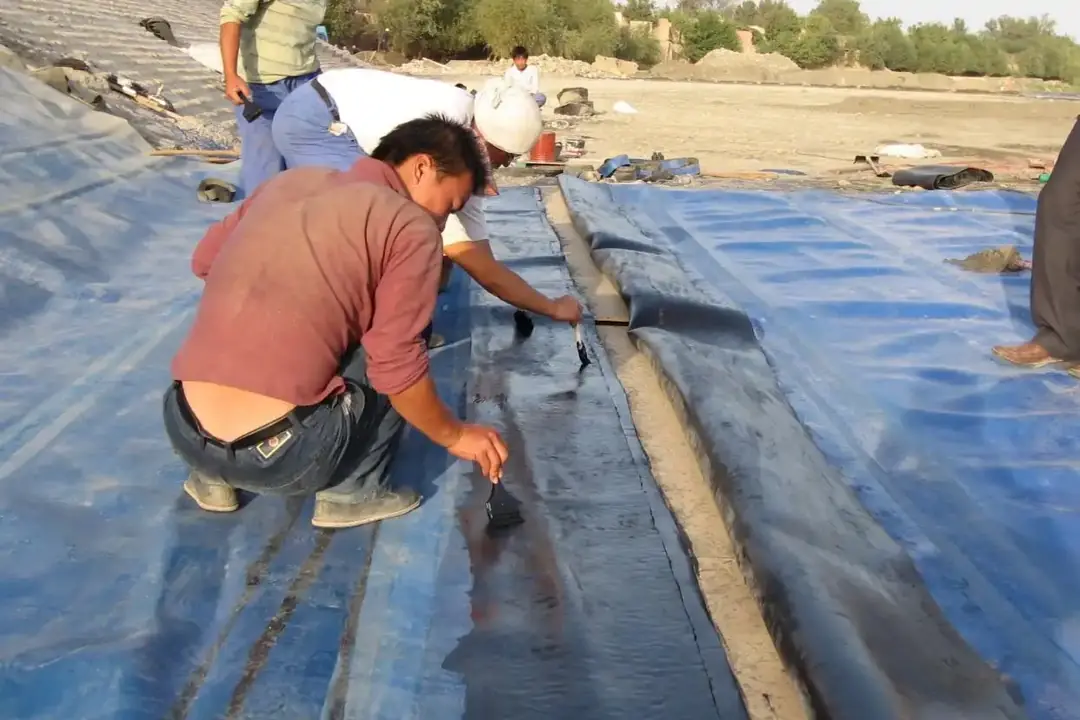
1. Dam Collapse and Emptying: Completely collapse the dam bladders, empty the internal water and/or gas, thoroughly eliminate the internal pressure of the dam bladders, and dry the dam surface to keep it dry and clean.
2. Site Safety Protection: Install pollution-blocking facilities in the upstream river channel to prevent sharp debris and stones from entering the construction area; disconnect the power to the construction area, hang safety warning signs, and set up barriers; for underwater damaged areas, pump out the accumulated water or conduct professional diving operations.
1. The construction temperature should be controlled between 18~25℃, and the ambient humidity should be <70%;
2. Construction is strictly prohibited in rainy weather, strong winds, harsh sunlight exposure, and humid environments.
1. Materials: Dam bladder repair tape of the same material, sealing strips, and special rubber mortar (chloroprene rubber/Lekner);
2. Tools: Grinding wheel, wood file, brush, compaction roller, 120# gasoline/toluene, and counterweight sandbags.
1. Minor Wear and Shallow Scratches (Only the adhesive surface is damaged, the canvas is intact)
Construction Steps: Surface cleaning → Dam body grinding → Solvent cleaning and degreasing → Natural drying → Applying cold-applied repair patch → Sealing edges with adhesive strips → Overall compaction → Static pressure with heavy objects for 24 hours.
2. Localized Damage and Small-Area Tears (Damage size ≤ 10cm, canvas damaged)
Use double-sided adhesive patching. The warp and weft directions of the repair tape should be completely consistent with the original dam bag; the repair area should extend 15-20cm beyond the damaged edge; apply adhesive 3-4 times → patch application → Roller compaction → Edge sealing → Static pressure with heavy objects for at least 24 hours. 3. Large-area tears and holes (damage size > 10cm, penetrating damage): Use a steel plate reinforcement process. Lay rubber cushioning pads on both sides of the dam bag, and install steel plates to fully cover the damaged area. The steel plates should extend at least 15cm beyond the damaged edge. Tighten bolts evenly. When construction conditions permit, use double-sided adhesive patching + external steel plate double reinforcement.
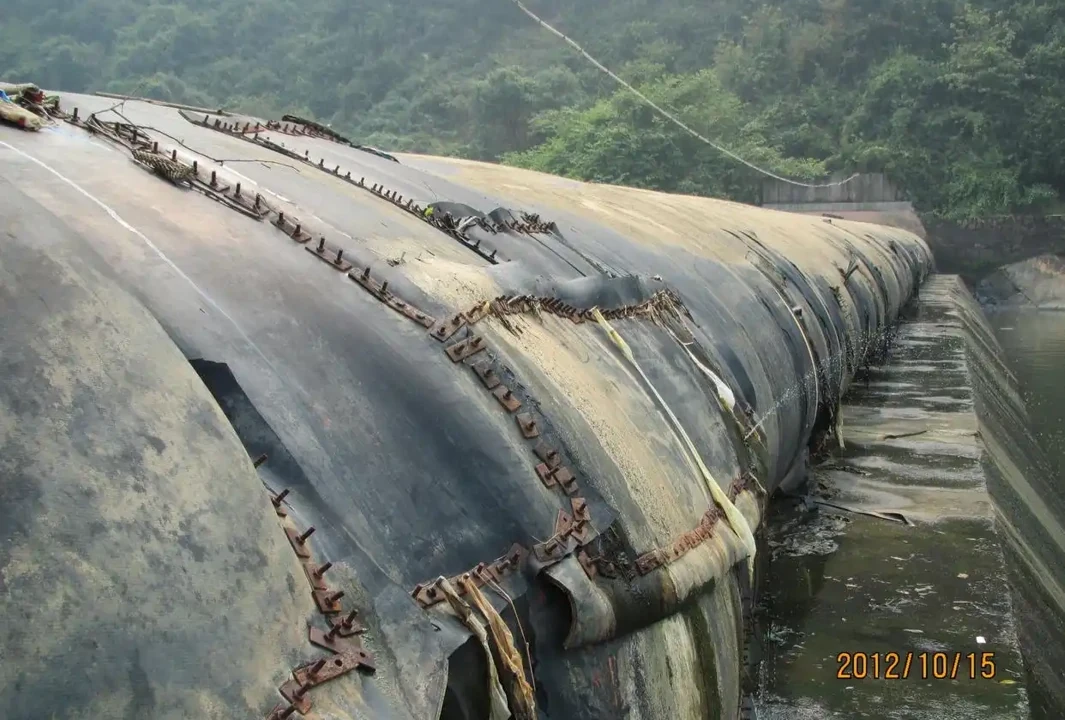
4. Large-area aging and multiple cracks: Cut and remove the aged and damaged parts of the dam bag, replace with new dam bag tape of the same specification, and use double-layer adhesive patching for reinforcement. Stagger the repair seams to ensure a tight seal.
1. Inspection and Location: Conduct a comprehensive inspection of the dam body to identify the location and extent of damage, mark the damaged areas, and determine the depth and severity of the damage.
2. Surface Treatment: Grind the damaged area and surrounding surfaces until they are matte and uniformly rough. Excessive grinding is strictly prohibited and may damage the canvas. Wipe with gasoline/toluene to thoroughly remove oil and dust, and allow to air dry completely.
3. Cutting Repair Materials: Cut the repair tape to the size of the damage, ensuring a matching specification and that the warp and weft of the tape are consistent with the original dam bag.
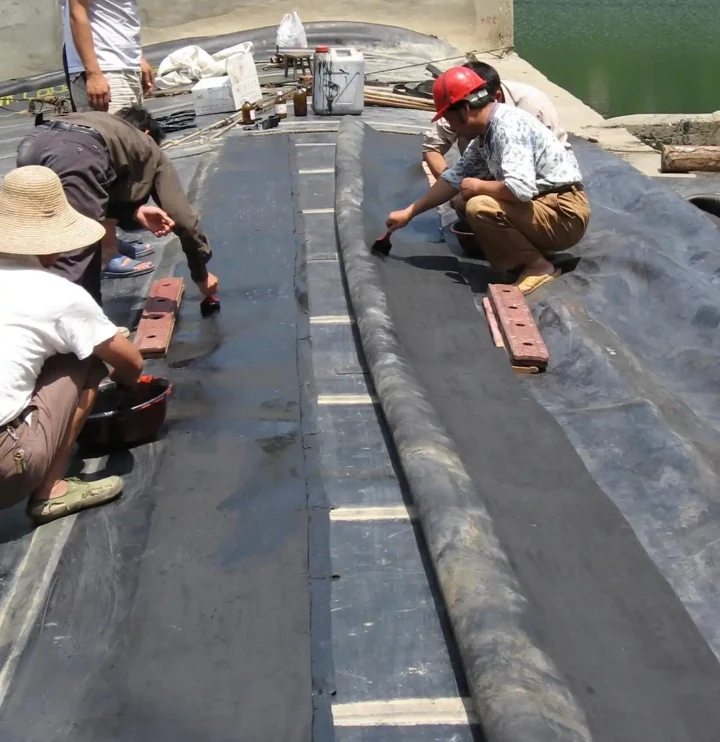
4. Applying Adhesive: Apply 3-4 coats of adhesive to both the dam body repair surface and the repair tape surface, with a 10-25 minute interval between each coat. The adhesive should be ready for application only when it is no longer sticky and has a stringy consistency.
5. Applying and Compacting: Align the repair patch and apply it to the correct position. Roll the patch evenly from the center outwards to thoroughly remove any internal air bubbles. Apply sealing strips to the edges and roll again to seal.
6. Pressure Curing: Apply uniform static pressure to the repaired area using counterweight sandbags. Curing time should be ≥24 hours. During curing, soaking in water, folding, touching, and uneven stress are strictly prohibited.
7. Acceptance Test: After curing, slowly fill the dam bag with water/air. Check three times at 0.5 hours, 2 hours, and 24 hours. No leakage or delamination indicates it is "qualified".
1. Construction is strictly prohibited in environments with temperatures below 15℃, rain, high humidity, or direct sunlight.
2. Excessive grinding that damages the dam canvas, incomplete application of adhesive, excessively thick application of adhesive, and failure to allow the adhesive to fully dry before bonding are strictly prohibited.
3. Within 24h of repair completion, the dam must not be soaked in water, bent, moved, or subjected to stress.
1. The repair tape must be of the same material and strength as the original dam bag, and the warp and weft directions must be completely matched.
2. Special rubber dam repair adhesive must be used; ordinary glue is strictly prohibited as a substitute.
1. Within 72 hours of repair completion, a low-water-level trial run should be conducted, with continuous monitoring of leakage and deformation at the repaired area.
2. A comprehensive inspection of the dam body should be conducted before the flood season. Any minor damage should be repaired immediately; operation of the dam bag with damage is strictly prohibited.
3. In hot weather, the dam body should be cooled by water spraying to maintain a thin layer of overflow water and delay dam aging.
1. When working at heights or near riverbanks, safety belts must be worn and proper safety precautions must be taken; for underwater operations, ventilation and anti-suffocation safety measures must be in place;
2. Repair adhesives are flammable; open flames are strictly prohibited at the construction site. Good ventilation must be maintained, and fire-fighting equipment must be available.
Empty and lower the dam → Clean and dry again → Select homogeneous materials → Fine grinding → Apply multiple thin coats of adhesive mortar → Bond without air bubbles → Static pressure curing → Slow water filling and pressure testing
Strictly control construction temperature and humidity, and strictly prohibit the operation of dam bags with defects.


Hello, I am the online customer service


