
In the operation of pillow-type (end-type) rubber dams, shoulder collapse is a very common engineering problem. Shoulder collapse occurs when, after the dam bag is inflated and raised, the height of the dam crest near the two side abutments is lower than the middle section of the dam body, causing premature overflow at the ends and preventing the designed water-retaining height from being reached. Many people simply attribute shoulder collapse to the civil engineering foundation, installation, or operation scheduling. However, extensive engineering practice has proven that the root cause of shoulder collapse is largely related to the manufacturing process of the dam bag factory. Based on the relevant requirements of the "SL227-2014 Rubber Dam Technical Specification," this article will analyze the causes, hazards, and process optimization solutions of shoulder collapse from the perspective of production technology.
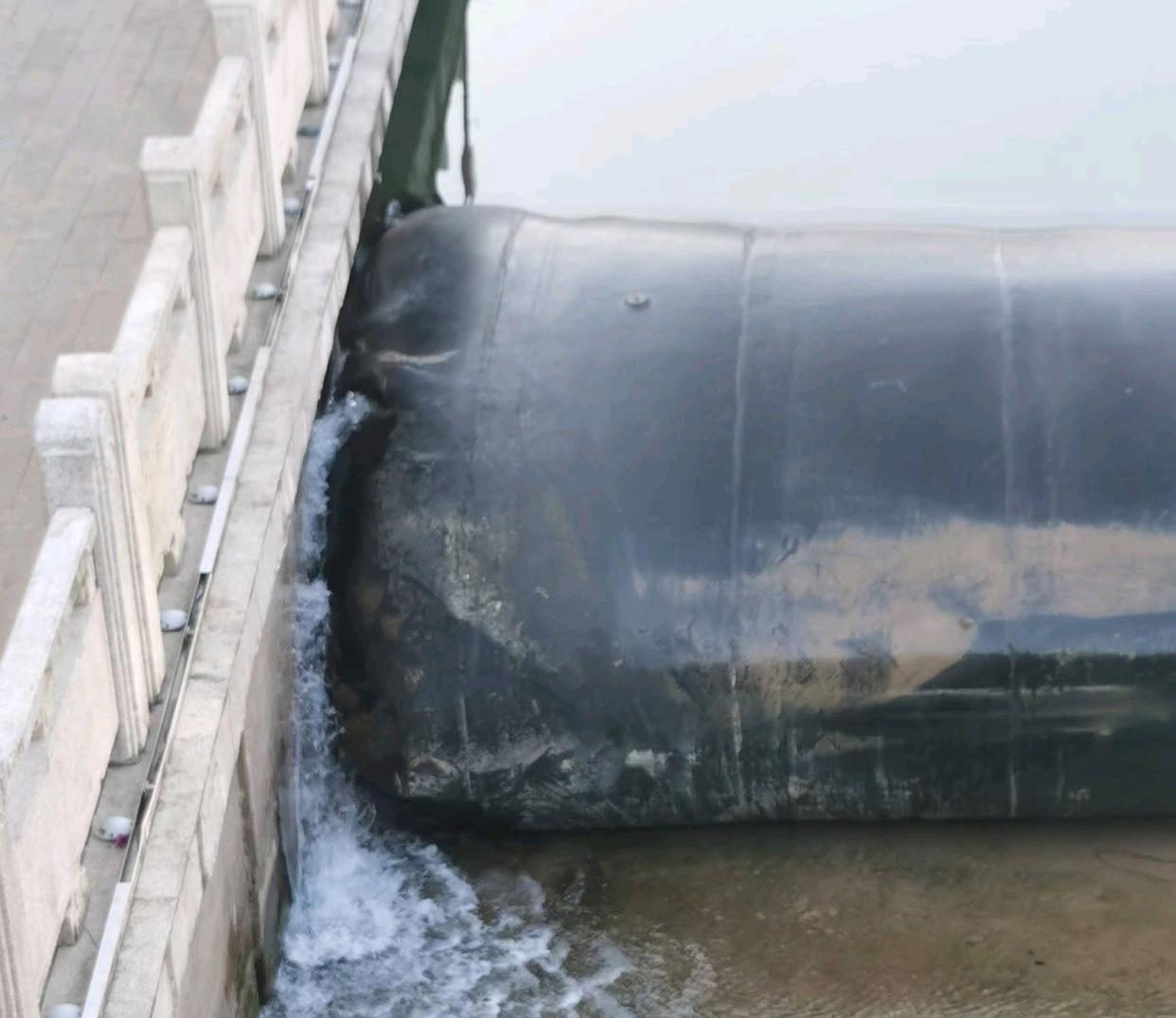
Pillow-type rubber dams have independent end caps at both ends. The rubber sheeting of the end caps and the main body of the dam are spliced and vulcanized in the factory. If the splicing dimensions and curvature are not properly controlled during production, a large arc transition will naturally form at the connection between the end cap and the dam body. When the dam bag is filled with water and expands, the end is constrained by the structure and cannot fully unfold upwards, forming a fixed shoulder collapse. This is a typical process-induced shoulder collapse, and even if the civil engineering and installation are fully up to standard, shoulder collapse will still occur after operation.
Insufficient allowance is allowed for end extension during factory layout, resulting in an undersized end cap circumference. After dam filling, the end of the dam bag is tightened, and the insufficient allowance for upward lifting directly causes the end to not rise high enough, forming a shoulder collapse. Conversely, if the end circumference is too large, wrinkles and stress concentration are likely to occur. Dimensional accuracy control is the most critical challenge in production.
Excessive thickness of the overlap area between the plug and the dam body's rubber sheet, with multiple layers of canvas, increases rigidity and reduces flexibility at the joint after vulcanization. When the dam bag is inflated, this area is difficult to stretch and unfold, resulting in a rigid bend, preventing the end of the dam bag from rising, and exacerbating shoulder collapse. Improper control of vulcanization temperature and time can also damage the internal skeleton fibers of the rubber sheet, further reducing the end's extensibility.
The inner arc transition radius of the plug is too large during manufacturing. After water expansion, the end naturally spreads outwards instead of rising vertically, directly forming a noticeable shoulder collapse. Many small manufacturers directly use generic templates without optimizing the plug's arc radius specifically for the dam height of this project, resulting in a prominent shoulder collapse problem.
Uneven thickness of the rubber sheet and canvas tension within the same dam bag, with inconsistent extensibility at both ends and in the middle. Unsynchronized deformation after inflation, with less stretch at both ends than in the middle, exacerbates shoulder collapse. Additional Explanation: Besides process-related shoulder collapse, there are also installation-related shoulder collapse and resistance-related shoulder collapse. During installation, the wrinkles at the end of the dam bag were not flattened; during operation, the friction between the plug and the sidewall hinders the plug from rising. These two types are site-related factors, but process defects can amplify the severity of these two types of shoulder collapse.
1. Reduced effective water-blocking height, failing to meet water storage design standards, and damaging the scenic waterfall effect;
2. Long-term premature overflow at the ends, with water continuously pounding the ends of the dam bag, causing strong local vibrations, accelerating aging and damage of the dam bag, and shortening its overall lifespan;
3. Stress concentration at the folded areas, and long-term repeated stretching, easily leading to delamination and cracks, increasing the frequency of later maintenance and raising operation and maintenance costs.
Perform separate calculations for the end cap development based on the designed dam height, and reasonably increase the allowance for the end circumference to allow sufficient upward extension space after filling with water; the allowance should not be too large to prevent wrinkles.
Thin the area where the end cap overlaps with the dam body, reduce canvas layers, improve the flexibility of this area, and make it easier for the end of the dam bag to extend and rise.
Rejecting generic templates, the inner curve of the end cap is customized according to the dam height and water filling pressure of this project, reducing unnecessary rounded transitions.
Ensuring uniform adhesive tape tension and thickness throughout the entire dam bag reduces differences in extensibility at different locations.
Shoulder collapse of pillow-type rubber dams is the result of multiple factors including process, civil engineering, installation, and operation, but the manufacturing process is the root cause. If the dam bags have inherent manufacturing defects at the factory, subsequent adjustments through civil engineering, installation, and operation can only slightly alleviate the problem, not fundamentally eliminate shoulder collapse. During project selection, manufacturers should be required to conduct specialized designs for shoulder collapse during the production phase to reduce the probability of collapse from the source.


Hello, I am the online customer service


